


Precision Filter
What Is Precision Filter
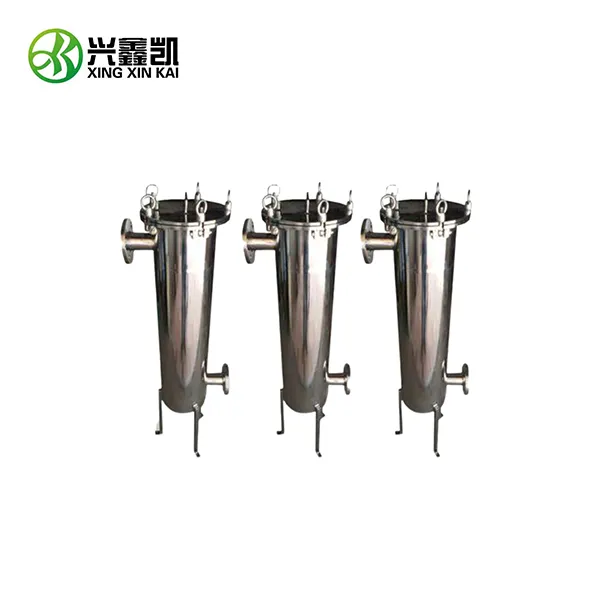
Precision filter, also known as security filter, is generally set before the pressure vessel to remove fine particles above 1 degree to meet the requirements of subsequent processes for water intake, and sometimes at the end of the whole water treatment system to prevent fine particles (such as broken resin) from entering the finished water. Precision filtration system (also known as security filter) mostly use stainless steel as a shell, internal filter element (such as PP filter cartridge), mainly used in multi-media pretreatment filtration, reverse osmosis, ultrafiltration and other membrane filtration equipment before. It is used to filter out fine substances (such as tiny quartz sand, activated carbon particles, etc.) to ensure that the filtration accuracy of water quality, and the protective membrane filter elements are not damaged by large particles.
Advantages of Precision Filter
Particle removal
Precision filters are designed to remove suspended solids, such as dust, dirt, rust, and sediments, from the liquid. By trapping these particles, the filter prevents them from reaching downstream equipment or products, ensuring cleaner and clearer liquids.
Contaminant removal
Precision filters can also remove other types of contaminants, including bacteria, microorganisms, algae, and larger organic matter. This is especially important in industries like pharmaceuticals and food production, where maintaining high levels of purity is critical.
Protecting equipment
Precision filters act as a protective barrier for downstream equipment, such as pumps, valves, and membranes. By removing solid particles and impurities, they prevent clogging, scaling, or fouling that could damage or reduce the efficiency of the equipment.
Enhancing product quality
In many industries, the quality of the final product heavily relies on the purity of the liquid used during the manufacturing process. Precision filters help ensure that the liquid meets required standards, resulting in improved product quality and consistency.
Maintenance and cost reduction
By removing contaminants, precision filters can prolong the lifespan of equipment and reduce maintenance requirements. They minimize the risk of blockages, decrease downtime, and potentially reduce the need for costly repairs or replacements.


Why Choose Us
Our factory
A comprehensive water treatment equipment company specializing in design, production, installation, and consulting services. Our production base is located on the beautiful banks of the fuchun river, adjacent to the hangzhou xinjing expressway, with convenient transportation. Purchase of standard steel structure new factory building with an area of nearly 3000 square meters in changxing national development zone, zhejiang province.
Production equipment
Crane, cutting machine, rolling machine, saw machine, lathe, automatic polishing machine, spray booth, rocker drill, automatic submerged arc welding, automatic argon arc welding machine, gas shielded welding machine, argon arc welding machine, plasma cutting.
Our product
Quartz sand filter, activated carbon filter, multi-media filter, iron and manganese removal filter, filter element filter, fiber bundle filter, bag filter, titanium rod filter, hair filter, water softener, ultraviolet sterilizer, ozone sterilizer, industrial pure quartz sand filter, activated carbon filter, multi-media filter, iron and manganese removal filter, filter element filter, fiber bundle filter, bag filter, titanium rod filter, hair filter, water softener, ultraviolet sterilizer, ozone sterilizer, industrial pure water equipment, reverse osmosis pure water equipment for drinking water, degassing tower, automatic dosing device, ozone mixing tower, ion exchanger, resin.
Production market
European and american markets, asia pacific market.
Types of Precision Filters
Precision filters come in several types, each suited to specific applications and types of contaminants. Here are some of the most common types:
Membrane filters
Membrane filters are widely used in applications requiring high levels of purity, such as in the pharmaceutical and food and beverage industries. These filters use a thin, semi-permeable membrane to separate contaminants from the fluid.
Depth filters
Depth filters capture contaminants throughout the entire thickness of the filter material, rather than just on the surface. This makes them ideal for applications where high contaminant loads are expected.
Cartridge filters
Cartridge filters are cylindrical filters that can be easily replaced when they become clogged. They are used in a variety of industries, including water treatment and chemical processing.
Bag filters
Bag filters use a bag-shaped filter element to capture contaminants. These filters are often used in applications where large volumes of fluid need to be filtered quickly.
Hepa filters
Hepa (high-efficiency particulate air) filters are designed to remove at least 99.97% of airborne particles 0.3 microns or larger. They are commonly used in cleanrooms, healthcare facilities, and hvac systems.
Activated carbon filters
Activated carbon filters are used to remove organic compounds and chlorine from fluids. These filters are commonly used in water treatment and air purification systems.
Uv filters
Uv filters use ultraviolet light to kill or inactivate microorganisms in fluids. They are often used in water and air purification systems where microbial contamination is a concern.
Main Application Areas of Precision Filter
Automobile industry
Painting, paint and paint.
Electronics industry
Pre-treatment of process water, pre-filtration.
Edible oil and beverage industry
Clarification and filtration of fruit juice and beverage juice, milk, etc., brewing, vinegar, edible oil
Petrochemical, pharmaceutical and chemical industry: In addition to particles of chemicals, oils, etc.
Biopharmaceutical industry
Biological and fermentation, medical water, washing water, high viscous liquid, etc.
Environmental protection
Industrial and domestic water, textile and papermaking wastewater, metal processing fluid.
Precision Filter Working Principle
Precision filters are the primary purification equipment in industrial air handling. The air in the air compression system usually comes from ordinary air. After being compressed by the air compressor, it contains residual impurities such as fine particles, suspended solids and oil in addition to a certain amount of water. These impurities will not only rust the air pipeline, increase the pressure drop, damage the precision instruments, cause machine failure, but also affect product quality, reduce production efficiency, endanger personnel health, and increase production costs. High quality precision filters provide pure, high quality air.
As long as the precision filter uses the post-cooler to cool the compressed air to generate the condensation principle, the gas rotates at high speed inside the filter, sharply turns, violent collision, sudden change in velocity, and other centrifugal forces and inertia forces, which make the heavier liquid The action is taken from the gas-liquid mixture to achieve a preliminary separation of the liquid gas. The liquid state is used again, and the vapor particles penetrate the filter fiber filter layer in the inside or out, and the filtration process follows the agglomeration mechanism of the Brownian motion. To make the finer and lighter liquid, the vapor phase condenses and grows to a certain extent and separates.
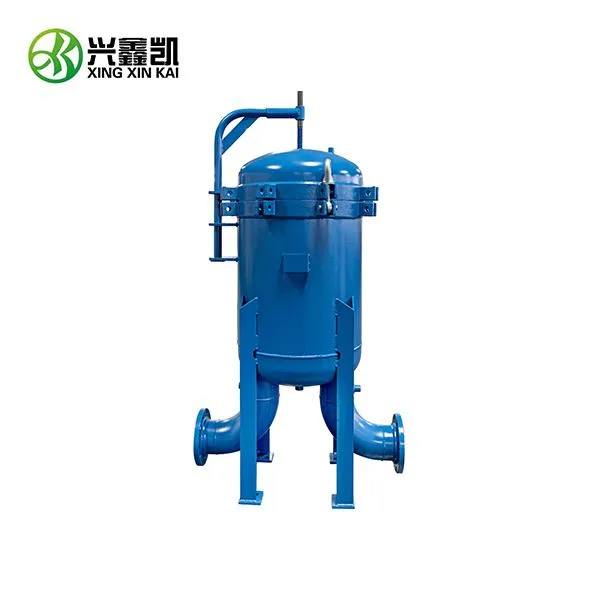
Made of high-quality aluminum alloy or carbon steel, electrostatically sprayed epoxy resin powder inside and outside the shell to improve durability and corrosion resistance; flow path is enlarged to reduce pressure drop, O-sealing anti-leakage ring, ribbed shell, easy to use The elbow wrench, the differential pressure prompts the best time to replace the filter, the liquid level indicator can be used to visually monitor the level of the liquid level, and always pay attention to prevent maintenance, to avoid downstream pollution. The working pressure is 0.2--1.3Mpa, and the working temperature is less than or equal to 66 °C.
Choosing The Right Precision Filter For Your Industrial Application
In industrial applications, precision filters are an important part of ensuring the quality and efficiency of the production process. They remove impurities, contaminants, and solid particles from fluids used in a variety of industries, including chemical processing, food and beverage, pharmaceuticals, and more. Choosing the right precision filter for your industrial application is critical to maximizing performance, reducing maintenance costs, and extending equipment life. Here are some of the key factors to consider when choosing the right precision filter:
Type of fluid used
Different types of fluids require different types of precision filters. For example, some fluids may contain large particles that require a coarse filter, while others may require finer filters to remove smaller contaminants.
Flow rate
The flow rate of the fluid is an important consideration to ensure that it can handle the amount of fluid passing through it without causing any bottlenecks or pressure drops. Higher capacity may be required for higher flow rates.
Filter material
The material of the precision filter will affect the durability and effectiveness of the filtration process. There are usually materials such as stainless steel, polypropylene, and nylon, etc., depending on the application.
Micron grade
The micron grade determines the size of the particles it can capture. A lower micron rating means smaller particles can be captured, but it can also affect flow rates, so it's important to find a balance between filtration efficiency and flow rate.
Maintenance and replacement
It is important to consider how easy it is to maintain and replace. Some filters may need to be replaced more frequently than others, so it's important to consider replacement costs and downtime during the production process.
By taking the time to carefully analyze these factors, you can be sure that you are choosing the right precision filter for your industrial application. We can also help you through the selection process and provide expert advice on maintenance and replacement.
Precision Filter Core and Maintenance Requirements
The precision filter is a versatile new filter when it is used. It is mainly composed of a filter and a filter element when it is used. It has its application in many industries, due to its high-precision filtration, in metallurgy. Chemicals, textiles, printing and dyeing, electroplating, medicine, food and other industries are widely used, because these industries need higher precision, but the use of ordinary filters can not hit such a high precision requirements, so precision filters turned out This changed the status quo. The precision filter has the characteristics of high temperature adaptability, large processing volume, and high filtration precision. The shell of the precision filter cartridge body is generally made of stainless steel. The interior adopts tubular filter elements such as PP melt blowing, wire burning, folding, titanium filter elements and activated carbon filter elements as filter elements. Different filter elements are selected according to different filter media and design process. Meet the effluent quality requirements.
The core part of the precision filter is the filter element. The filter element is made of special materials and it is a consumable part. Special protection is required. When the precision filter is working for a period of time, the filter element will contain a certain amount of impurities. At this time, the pressure drop will increase and the flow rate will decrease. It is necessary to remove the impurities in the filter and clean the filter element. When removing impurities, special attention should be paid to the precision filter element, which must not be deformed or damaged. Otherwise, the filter element is installed again, and the purity of the filtered medium cannot meet the design requirements.
Some precision filter elements can not be used repeatedly, such as bag filter, polypropylene filter, etc. If the filter element is found to be deformed or damaged, it needs to be replaced immediately.
Process Flow of Precision Filter
Characteristics of raw water from security/precision filter
After filtering by a multi-media filter and an activated carbon filter, the water will occasionally contain particulate impurities due to the leakage of the filter layer. These particles are potentially harmful to the reverse osmosis membrane and the vertical multistage centrifugal pump. As the name suggests, the security filter is the last line of protection before entering reverse osmosis.
Security/precision filter working principle and process flow
The security/precision filter is equipped with a polypropylene melt-blown filter element with a retention accuracy of 5μm and an external pressure filter method. It is mainly used to remove impurities such as suspended solids, particles and colloidal particles greater than 5μm in the water to ensure that the reverse osmosis device is satisfied. The influent SDI value requirement (SDI <5) achieves the purpose of protecting the reverse osmosis membrane.
Our factory
A comprehensive water treatment equipment company specializing in design, production, installation, and consulting services. Our production base is located on the beautiful banks of the Fuchun River, adjacent to the Hangzhou Xinjing Expressway, with convenient transportation. In Hangzhou, our sales department is located near the Shida freight market and has established long-term cooperative relationships with multiple freight companies, greatly facilitating the transportation of customers' goods. Production equipment: Crane, cutting machine, rolling machine, saw machine, lathe, automatic polishing machine, spray booth, rocker drill, automatic submerged arc welding, automatic argon arc welding machine, gas shielded welding machine, argon arc welding machine, plasma cutting.


certificate

FAQ